EXPLAINERS · AUG 10
The Thunderstorm Recipe: Moisture, Lift, and Instability
How thunderstorms form: the three ingredients every storm needs, the three stage life cycle from cumulus to collapse, and what separates a storm from a severe one.

Grounded in National Weather Service definitions; suitable for classrooms and other curious humans.
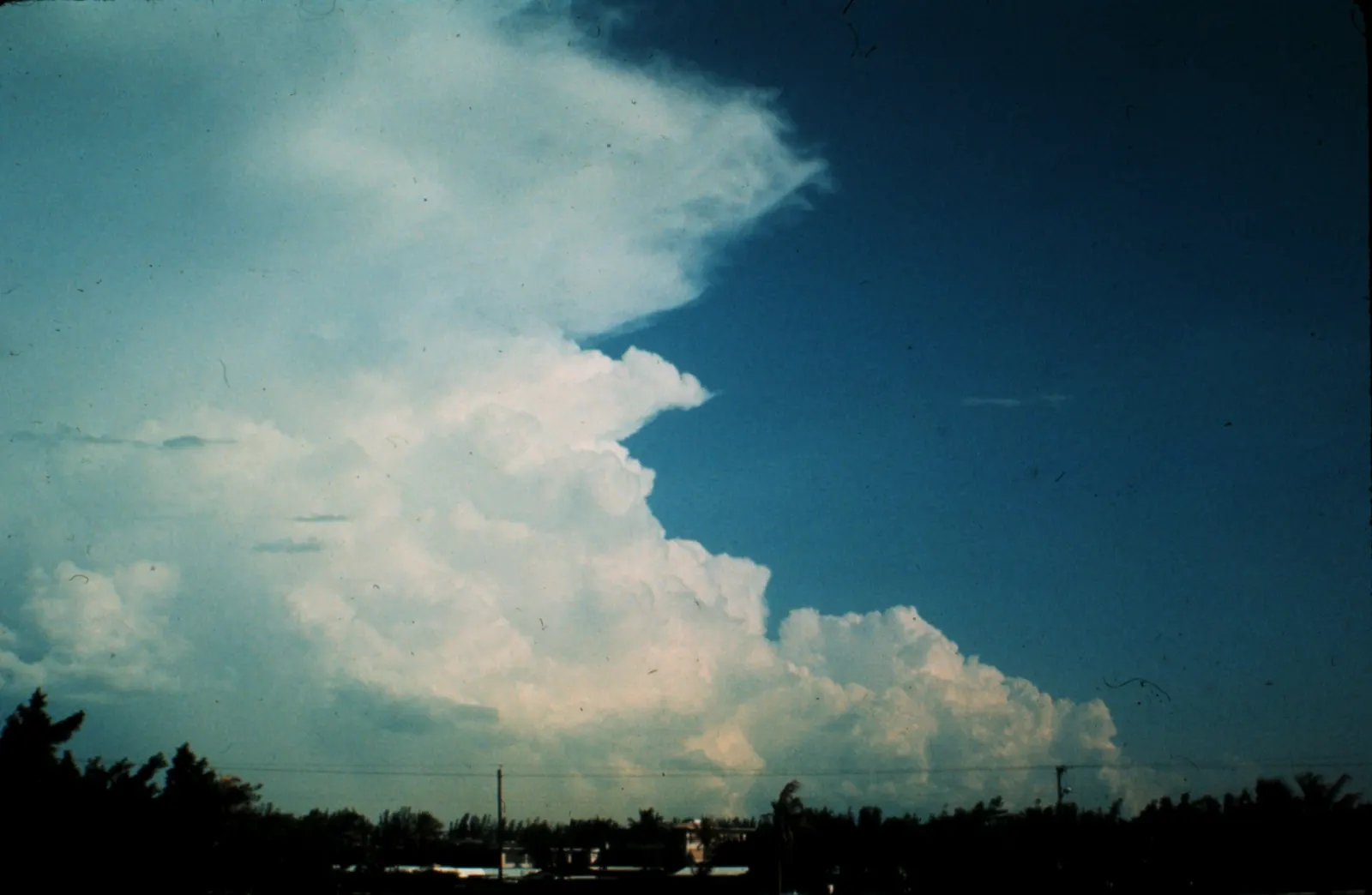
Thunderstorms need three ingredients: moisture to fuel them, instability so rising air keeps rising, and lift to start the rising. With all three, a storm runs a three stage life: a towering cumulus of pure updraft, a mature stage where updraft and rain cooled downdraft coexist and the weather peaks, and a dissipating stage where the downdraft wins and the storm exhales itself apart. Add wind shear and storms organize, live longer, and turn severe.
The three ingredients
- Moisture. Water vapor is the fuel. When it condenses into cloud, it releases the heat that keeps the storm's engine running. Humid, high air is a loaded pantry.
- . Warm air near the ground under colder air aloft means a lifted parcel stays warmer than its surroundings and accelerates upward, like a beach ball released underwater.
- Lift. Something must start the rise: a plowing under warm air, a sea breeze, a mountain slope, or the outflow of an earlier storm. No trigger, no storm, even with a loaded sky.
The life of a storm
Stage one is the towering : a muscular building the cloud tens of thousands of feet in under an hour. Stage two is maturity: precipitation becomes heavy enough to drag a cold to the ground while the updraft still feeds, and this coexistence delivers the storm's peak: heaviest rain, lightning, hail if the updraft is strong, gusty outflow. Stage three is collapse: the downdraft chokes off the updraft's warm inflow, the fuel line closes, and the storm rains itself out, often within thirty to sixty minutes of maturity.
What makes a storm severe
The fourth ingredient is : winds changing speed and direction with height. Shear tilts a storm so its downdraft no longer lands on its own updraft, letting the engine run for hours instead of minutes, and in strong shear the updraft itself can begin to rotate, producing , the storms responsible for most giant hail and violent tornadoes. Officially, severe means hail an inch or larger or of 58 mph or more.
Respecting the product
Every manufactures lightning, and lightning outruns rain: strikes can hit ten miles from the rain shaft, ahead of or behind the storm. The rule is boring and correct: when thunder roars, go indoors, and stay half an hour past the last rumble. The rock stays out in everything, but the rock has been struck before and describes the experience as clarifying.
Words in this lesson
Every marked word above is here in full, because a definition that only appears on hover is no use to somebody reading on a phone, printing the page, or listening to it.
- Cumulus
- A heaped, cauliflower cloud built by rising air. Given enough moisture and lift it can grow into a shower or a thunderstorm.
- Dew point
- The temperature air must cool to before its moisture starts condensing. It is an absolute measure of how much water the air holds, which is why it beats relative humidity for judging how a day will feel.
- Downdraft
- Air sinking through a storm, dragged down by falling precipitation and by evaporative cooling. When a downdraft cuts off its own updraft, the storm collapses.
- Front
- The boundary where two air masses of different temperature and moisture meet. Air gets lifted along a front, which is why most of a map's clouds and rain queue up on one.
- Gust
- A brief spike above the sustained wind.
- Instability
- The condition where air, once nudged upward, keeps rising on its own because it stays warmer than its surroundings. It is one of the three ingredients every thunderstorm needs.
- Supercell
- A rotating storm with a mesocyclone. Produces the giant hail and violent tornadoes.
- Thunderstorm
- Any storm producing thunder and lightning.
- Updraft
- The column of rising air inside a storm. It carries moisture upward and holds precipitation aloft until it grows too heavy.
- Wind shear
- Wind changing speed or direction with height.
This is a Working lesson
It belongs to the Weather School, which is free and always will be: twenty lessons from toddler to adult, every one with a printable worksheet and answer key that any classroom may copy. No account, no cost, no catch.
Another one at this level: layers of the atmosphere.
For teachers and every lesson.
Definitions in this explainer follow the National Weather Service. The rock checked twice. The rock always checks twice.