EXPLAINERS · AUG 14
Why the World Goes Quiet When It Snows
Why snow muffles the world: how fresh flakes trap sound, why the hush ends when the snow refreezes, and why cold mornings carry sound so far.

Grounded in National Weather Service definitions; suitable for classrooms and other curious humans.
Fresh snow is mostly air: a loose pile of six sided crystals full of tiny pockets and passages. Sound waves that wander into those pockets bounce around and get soaked up instead of reflected, so a snow covered street works like the padded wall of a recording studio. The hush is temporary. As the snow settles, melts, and refreezes into a hard crust, the surface turns reflective and the world gets loud again, often louder than before the storm.
The hush is real
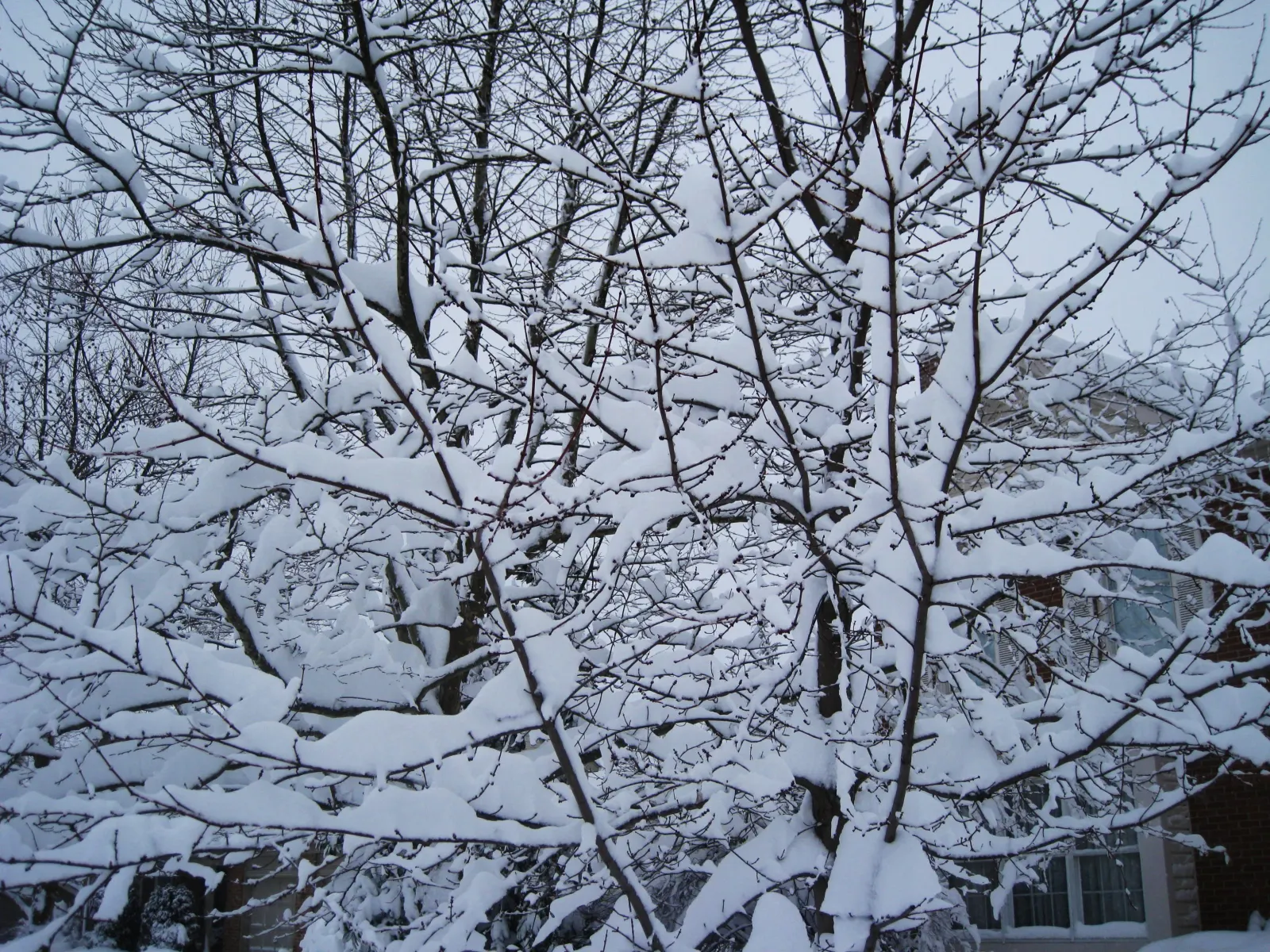
Step outside during a steady snowfall and the world sounds wrong, in the best way. Traffic softens. Footsteps disappear. Voices stop carrying past the driveway. People describe it as peaceful, or eerie, or churchlike, and every one of them is describing the same physical fact: the ground has stopped throwing sound back.
Fresh snow is mostly air
A snowflake is an ice crystal with six arms and a great deal of empty space between them. Pile up a few billion of them loosely and you get a blanket that is far more air than ice, riddled with tiny pockets and winding passages.
That structure is nearly identical to the acoustic foam lining a recording studio, and it works the same way. A sound wave that hits a hard flat surface, like pavement, bounces off nearly intact and continues its career. A sound wave that hits fresh snow slips into the pockets, ricochets around inside, and spends itself as it goes. Little of it comes back out. The energy is not gone from the universe; it has been shredded into warmth too faint to measure with anything but the silence.
Falling snow helps too
The quiet starts before the ground is even covered. Rain announces every single drop: on the roof, the windows, the leaves. Snowflakes are light, slow, and soft, and they land without comment. So a snowstorm removes the sound of its own precipitation while it lays down a carpet that swallows everything else. It is the only weather that gets quieter the harder it comes down.
Why the quiet does not last
Give the snowbank a day or two and the spell breaks. The crystals settle and weld together, the surface partially melts in the afternoon, and overnight it refreezes into a crust. All those sound trapping pockets close up, and the surface goes from foam back to something closer to tile.
A hard, icy snow surface does not just stop absorbing sound; it reflects it well. That is why a bitter morning after an old snow can sound so strangely crisp, with a train or a barking dog arriving from much farther away than usual. There is often a second accomplice: on cold of cloud. Full sun.">clear mornings a layer of warmer air can sit above the cold air at the ground, and that arrangement bends rising sound back down toward your ears instead of letting it escape upward. Hard crust below, bent sound above, and suddenly the whole county is audible.
Listening as observation
Which means your ears are a weather instrument. A muffled world says fresh, dry, fluffy snow, the kind that is mostly air, the kind worth a forecast that verified. A loud, crisp, carrying world says the snow is old and crusted, and the sidewalk will be ice before it is slush. The rock cannot hear, strictly speaking, but it has sat through enough winters to endorse the method: when the world goes quiet, look up. Something is falling.
Words in this lesson
Every marked word above is here in full, because a definition that only appears on hover is no use to somebody reading on a phone, printing the page, or listening to it.
- Clear
- Zero to one okta of cloud. Full sun.
- Okta
- One eighth of the sky. Sky cover is counted in oktas, from zero for clear to eight for overcast, which is why the familiar sky words are really just bands of a number.
This is a Foundation lesson
It belongs to the Weather School, which is free and always will be: twenty lessons from toddler to adult, every one with a printable worksheet and answer key that any classroom may copy. No account, no cost, no catch.
Another one at this level: warm and cold fronts.
For teachers and every lesson.
Definitions in this explainer follow the National Weather Service. The rock checked twice. The rock always checks twice.